How AI Is Reshaping Local SEO and What Your Business Should Do About It

For the last decade, local SEO has followed a fairly predictable playbook. Claim your Google Business Profile. Get reviews. Optimize your website for local keywords. Build some citations. Rinse and repeat.
That playbook still matters. But in 2026, a fundamental shift is underway that's rewriting the rules of local discovery. AI-powered systems — Google AI Overviews, ChatGPT, Bing Copilot, Apple Intelligence, and voice assistants — are increasingly the first point of contact between customers and local businesses. And the way these systems decide which businesses to recommend is meaningfully different from how traditional search works.
If you're a local business owner, this isn't a 'future trend to watch.' It's happening right now, and the businesses that adapt first are capturing market share from the ones that don't. Here's what's changed, what it means for your business, and exactly what to do about it.
The Shift from Search Results to AI Answers
Traditional local search works like this: someone types 'plumber near me' into Google, gets a list of results (the map pack, then organic listings), clicks on a few, and makes a decision. Your job as a business was to be in that list — ideally near the top.
AI-powered search works differently. Instead of presenting a list and letting the user choose, AI systems increasingly provide direct answers. 'The best-rated plumber in your area is XYZ Plumbing, known for same-day service and transparent pricing. They have 4.8 stars across 200+ reviews and specialize in residential repairs.' The user gets an answer, not a list.
This changes the game in several important ways:
First, there are fewer positions available. In a traditional search result, ten businesses might appear on page one. In an AI answer, one to three businesses get mentioned. If you're not one of them, you're not just below the fold — you don't exist in that interaction.
Second, the factors that determine who gets recommended are different. Traditional SEO is heavily weighted toward backlinks, domain authority, and keyword optimization. AI recommendations draw more heavily on review sentiment, content quality, business data consistency, and structured information. The AI needs to understand your business deeply enough to recommend it with confidence.
Third, the user's decision is often made before they visit your website. When an AI assistant recommends your business by name, with your phone number and a summary of your services, many users call directly without ever seeing your site. That means the information the AI has about your business IS your first impression.
How AI Systems Decide Who to Recommend
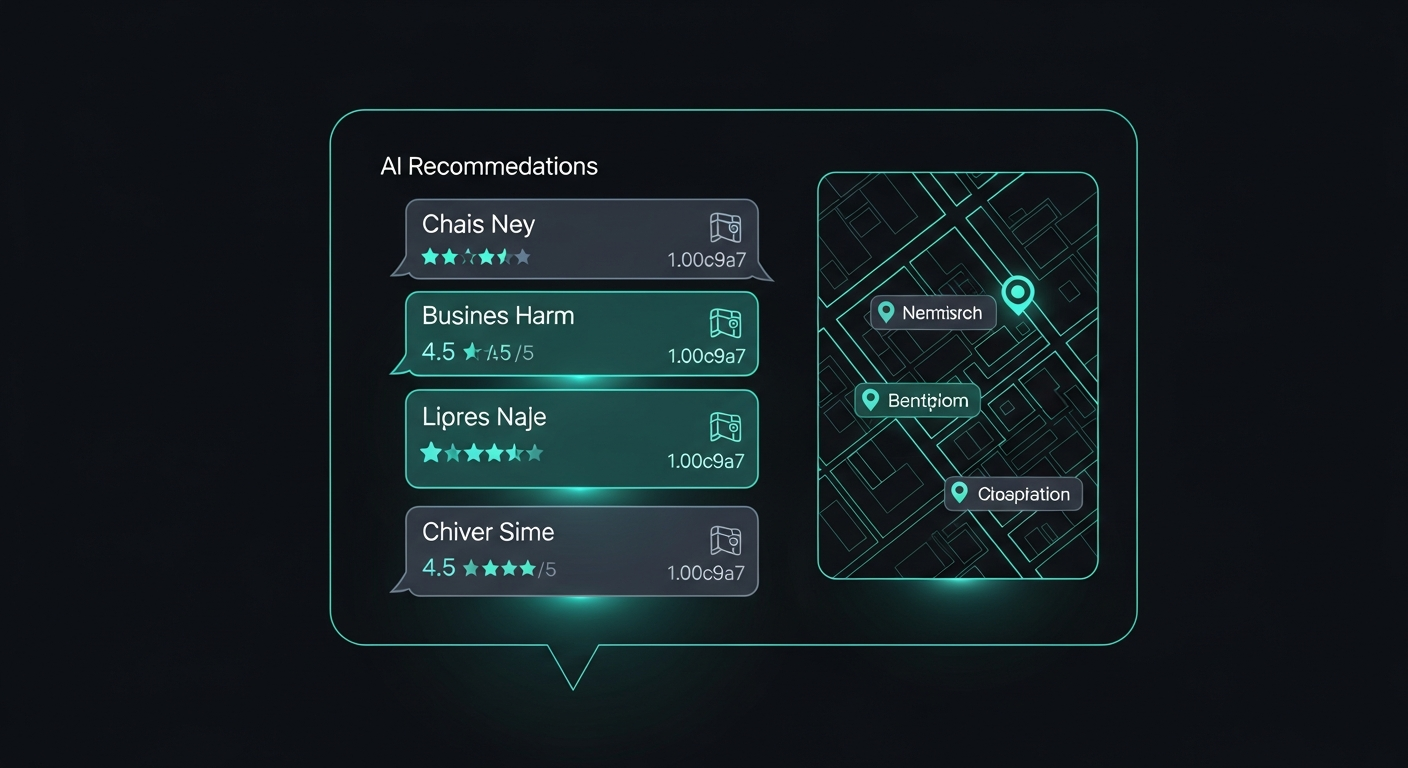
Understanding what AI systems prioritize is essential for positioning your business. While each system has its own algorithm, they generally evaluate businesses on several common factors:
Data consistency across sources. AI systems cross-reference your business information across dozens of sources — Google, Yelp, Apple Maps, Bing, industry directories, social platforms, and your own website. If your business name, address, phone number, hours, or service descriptions are inconsistent across these sources, the AI loses confidence in the accuracy of any single data point. Consistent, accurate data across all platforms signals reliability.
Review quality and recency. It's not just your overall star rating that matters — it's what customers say in their reviews, how recent those reviews are, and how you respond to them. AI systems can analyze review text to understand what your business does well and where it falls short. A business with 4.5 stars and 50 detailed recent reviews will often be recommended over one with 5 stars and 10 generic reviews from three years ago.
Structured data on your website. AI systems are remarkably good at extracting information from well-structured websites. Schema markup — the code that tells search engines and AI exactly what your business does, where it's located, what services it offers, and what those services cost — is becoming increasingly important. Businesses with comprehensive schema markup give AI systems the structured information they need to make confident recommendations.
Content depth and relevance. AI systems favor businesses that demonstrate genuine expertise through their web content. A plumber whose website has detailed service pages, a regularly updated blog about common plumbing issues, and clear explanations of their process will be seen as more authoritative than one with a three-page brochure site. The AI needs content to draw from when generating recommendations.
Engagement signals. How people interact with your business online — click-through rates, time spent on your website, phone calls from search results, direction requests — all feed into the AI's understanding of your relevance and quality. These are harder to directly control, but they're a downstream effect of everything else on this list.
The Google AI Overviews Effect
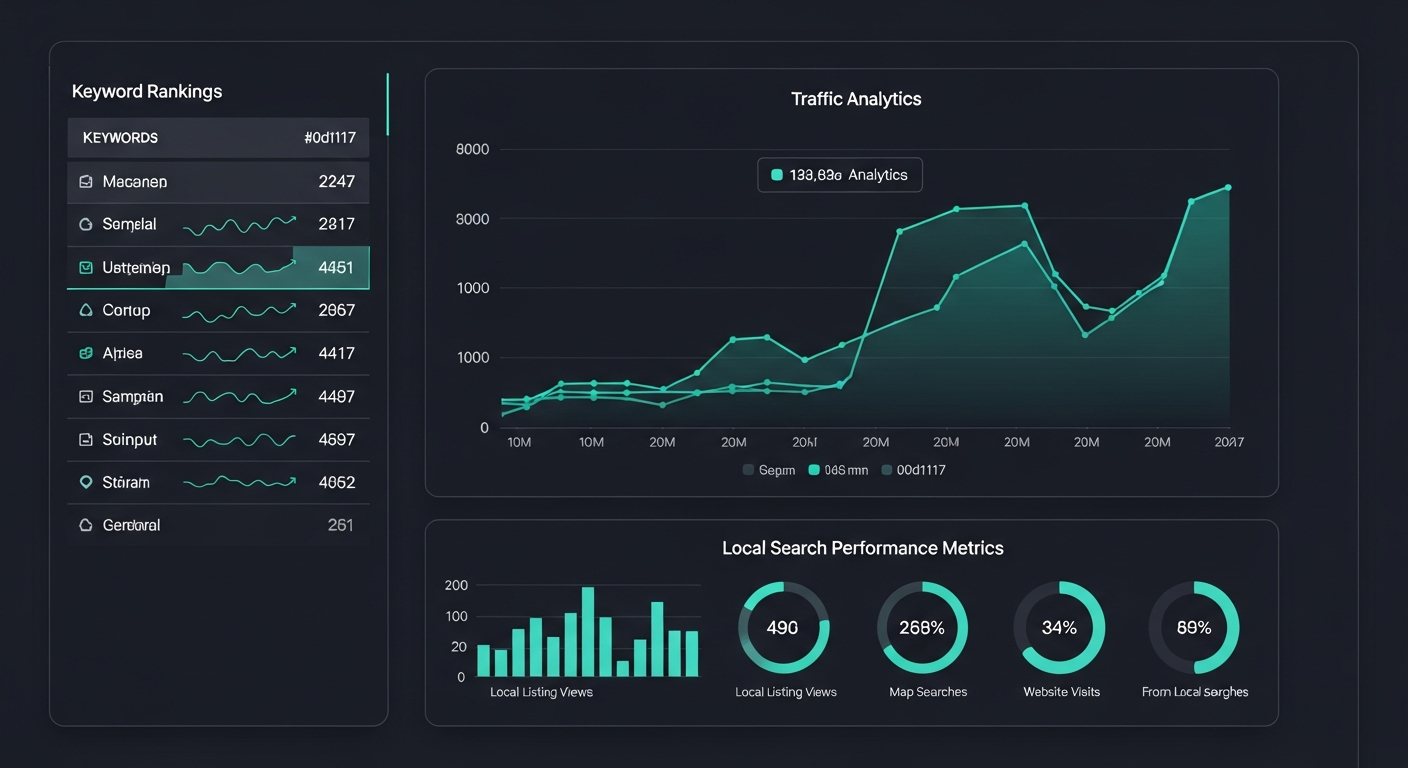
Google AI Overviews — the AI-generated summaries that appear at the top of many search results — deserve special attention because Google dominates local search. When someone searches for a service in their area, an AI Overview may now appear above the traditional map pack, providing a synthesized answer that references specific businesses.
Early data on AI Overviews shows some important patterns. Businesses that are referenced in AI Overviews see significantly higher click-through rates than those that appear only in traditional results. But the criteria for being included are more demanding — Google's AI draws from a wider range of signals and places a higher premium on content authority and data consistency.
For local businesses, this means the bar for visibility is rising. It's no longer enough to have a Google Business Profile and a few reviews. You need a comprehensive, well-structured web presence that gives Google's AI enough high-quality information to feel confident recommending you.
Voice Search and AI Assistants: The Zero-Click Future
Here's where it gets really interesting — and potentially concerning for businesses that aren't prepared. Voice search through AI assistants (Siri, Google Assistant, Alexa, ChatGPT voice mode) is growing rapidly. And voice search is almost always zero-click. The user asks a question, gets an answer, and acts on it — all without ever seeing a search results page.
'Hey Siri, find me a good Italian restaurant nearby that's open late.' Siri doesn't show a list of ten restaurants. It recommends one, maybe two, and offers to make a reservation or get directions. If your restaurant isn't the one Siri recommends, you don't get a second chance. There's no scrolling. There's no page two.
Voice search queries also tend to be more conversational and specific than typed searches. Instead of 'dentist Boise,' someone might ask 'who's the best dentist for kids in North Boise that accepts Delta Dental?' The businesses that can answer these specific, natural-language queries — through detailed, well-structured content — are the ones that win.
What Your Business Should Do Right Now
Here's the actionable part. You don't need to become an AI expert or hire a team of data scientists. But you do need to systematically address the factors that AI systems use to evaluate and recommend businesses. Here's your priority list:
Audit and unify your business data. Go through every platform where your business is listed — Google, Yelp, Apple Maps, Bing, Facebook, industry directories — and make sure your name, address, phone number, website, hours, and service descriptions are identical everywhere. This is the foundation. Inconsistent data kills your chances with AI systems.
Invest in your reviews. Not just getting more reviews, but getting detailed, recent reviews and responding to all of them thoughtfully. Ask satisfied customers to mention specific services in their reviews. Respond to negative reviews professionally and constructively. AI systems read your responses too.
Add comprehensive schema markup to your website. This is the technical piece that most small business websites are missing entirely. LocalBusiness schema, Service schema, Review schema, FAQ schema — these structured data types tell AI systems exactly what your business offers in a format they can directly consume. This is not optional anymore.
Create deep, authoritative content. Your website needs more than a homepage and a contact page. Each service you offer should have its own detailed page. You should have a regularly updated blog that demonstrates expertise in your field. FAQ sections should address the specific questions your customers ask. This content becomes the raw material that AI systems use to understand and recommend your business.
Optimize for conversational queries. Think about how people actually talk when they're looking for a business like yours. What specific questions do they ask? What concerns do they have? Build content that directly answers those natural-language questions. This positions you for both voice search and AI-generated answers.
Monitor your AI visibility. Start testing how AI systems talk about your business. Ask ChatGPT, Google AI, and Siri about services in your area. See if you come up. If you don't, that's valuable information about where your gaps are. If you do, pay attention to how you're described — it reveals what the AI understands (and misunderstands) about your business.
The Competitive Window Is Open — But Closing
Here's the reality that should motivate urgency: most local businesses haven't adapted to AI-driven discovery yet. They're still running the 2018 SEO playbook — claim the Google listing, get a few reviews, maybe write a blog post once a year. That creates an opportunity for businesses that move now.
The ones who optimize their data consistency, build comprehensive schema markup, create authoritative content, and actively manage their AI visibility will capture a disproportionate share of the AI-recommended traffic. And because AI systems build trust incrementally — rewarding consistent, long-term signals over quick fixes — the early movers will have an advantage that's difficult for latecomers to overcome.
This isn't about gaming an algorithm. It's about presenting your business with clarity, consistency, and depth across every channel where customers and AI systems discover you. The businesses that do this well aren't just optimizing for search — they're building a digital reputation that compounds over time.
At GrowWithOtter, we build websites and SEO systems specifically designed for this new landscape. Every site includes comprehensive schema markup, AI-optimized content structure, and the technical foundation for ongoing SEO. Our Website + SEO Content Engine packages start at $7,500, and our monthly care plans keep your content fresh and your data consistent.
The question isn't whether AI will change how customers find local businesses. It already has. The question is whether your business will be the one AI recommends — or the one it skips.
Ready to put these ideas to work?
Book a $500 AI audit and we'll map out exactly where AI and automation can create the most leverage for your business.
Book an audit →